
In the heart of Greenwich Village, C.O. Bigelow endures as America’s longest continually operating apothecary since 1838. For almost 200 years, they have catered to many of the country’s most prominent personalities, maintaining their commitment to personalized service, tailored formulas, and restorative natural remedies that reflect their enduring legacy. As the story goes, during his early light-bulb trials, Thomas Edison treated his burnt fingers with a Bigelow remedy, finding relief in its restorative formula.
Your pharmacy is the heart of your community. It’s a place where clinical expertise meets genuine human connection. It’s not just a business, but a trusted neighborhood anchor: the spot where patients feel known, supported, and cared for in ways that big-box competitors can’t replicate. It blends modern clinical services with old-school accessibility, offering personalized guidance, proactive outreach, and a level of attentiveness that turns everyday transactions into long-term relationships. In an era of rushed care and faceless systems, your independent pharmacy stands out by being exactly what patients crave most: reliable, responsive, and rooted in their wellbeing. The system, however, has its own thoughts.
“This might be cynical, but I think the system wants us to be non-existent,” said Alec Ginsberg, PharmD, RPh, fourth-generation pharmacist and owner & Chief Operating Officer, C.O. Bigelow. “It’s like they want us to either be absorbed by the vertically integrated networks or kind of wither away. I think that’s what it’s designed to do. The less cynical answer would be dispensers. They want us to only exist to serve them. I think dispensing is the lowest labor-intensive activity we can do—the kind that just continues feeding the system they’ve designed to drive all the money in their direction. All of us independents are trying to figure out how to keep ourselves from being absorbed into that system.”
An independent pharmacy should be a relationship-driven practice instead of a transaction-driven one. That means every interaction—whether it’s a quick over-the-counter question or a complex medication review—is treated as an opportunity to strengthen the patient connection. Your staff greets people by name. They remember family details. They notice when someone seems a little “off” and ask the extra question that uncovers a brewing issue. This level of attentiveness isn’t just good customer service; it’s a clinical advantage. When your patients feel comfortable, they disclose more, ask more, and follow through more. Your pharmacy becomes a trusted partner in their care, not just a stop on their errand list.
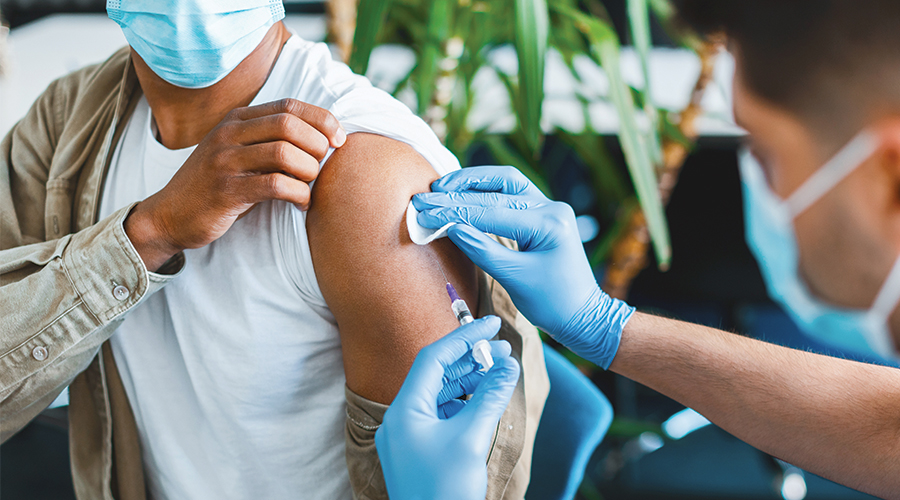
Being a relationship-driven practice doesn’t mean you’re old-fashioned. Today, independent pharmacies must also be proactive, modern, and clinically forward. That means offering services that meet the needs of today’s patients: immunization, point-of-care testing, chronic disease support, medication synchronization, adherence packaging, and collaborative care with local providers. It means using technology to streamline workflows, reduce errors, and free up staff time for meaningful patient engagement. It also means embracing meaningful data from dispensing analytics to adherence metrics, and to identify gaps in care and intervene early.
You should also be a healthcare educator. Patients are overwhelmed by information because much of it is conflicting or incomplete. They need a trusted voice to help them navigate everything from new therapies, insurance changes, and lifestyle modifications. You can guide patients through new diagnoses and help them understand treatment options. And because you’re accessible without an appointment, you often become the first stop for questions that might otherwise go unanswered.
What Patients Say They Want Most
- A pharmacist who knows their name
- Clear explanations without medical jargon
- Help navigating insurance and costs
- Consistent follow-up and proactive outreach
- A welcoming environment that feels human, not corporate
“Independents have superpowers,” Ginsberg says. “We have compassion, empathy, heart, and soul. Basically, all the human traits. There is a reason healthcare is called ‘care.’ Care is an inherently human trait and a human characteristic. When you’re in pharmaceutical or medical school, there is a class on bedside manners and how you talk to people. It’s something that’s taught, which is why I think independent pharmacy is the human part of pharmacy. If you think about what everything else is, whether it’s chain pharmacy or telemedicine or mail-order medicine, it’s all the places where you can’t get somebody on the phone, or you can’t speak to a human being, and I think that’s the easiest way to summarize what the difference is.
“Healthcare is much like when you have a problem and want to speak to a trustworthy human being who you’re familiar with and who you know will calm your anxiety and say, ‘I hear you, and I’m going to take care of your problem.’ You don’t want to be told that by an AI robot. You don’t want to be told through an email or a text message, and surely not with a guy at a call center halfway across the world. You want to hear it from your local community pharmacist who you’ve seen and met before and know has taken care of other people’s problems. I think that’s what the number one superpower is of an independent pharmacy. We still have that human element, while the rest of the world is going the opposite direction.”
There are many independent pharmacies out there using their platforms on social media, in newsletters, in-store signage, and community events to share timely, relevant health information. They host vaccine clinics, wellness days, and disease-specific workshops. They often partner with local schools, senior centers, and employers. This is where they become a visible, active force for community health instead of just a retail location.
Another characteristic of a strong independent pharmacy is its commitment to personalization. While big chains can offer convenience, they can’t match the tailored experience independents provide. The personalization shows up in many forms, such as custom compounding, individualized adherence solutions, flexible delivery options, and the ability to adjust services based on community needs. It also shows up in the way independents design their pharmacies—warm, welcoming, and easy to navigate.
Personalization also means meeting patients where they are. For some, that means offering multilingual support. For others, it means providing private consultation rooms where sensitive conversations can happen comfortably. However, for busy families, it may mean extended hours or the convenience of a drive-thru. For patients who are in their homes, it might mean delivery along with a quick wellness check. Your independent pharmacy should be quick enough to adapt, evolve, and create based on what its community truly needs.
Without a strong, empowered team, none of this is possible. An independent pharmacy should be a place where technicians, clerks, and pharmacists work at the top of their skill sets. Technicians should be trained and trusted to handle complex tasks. Pharmacists should be freed from unnecessary administrative burdens, so they focus on clinical care. The entire team should feel valued, supported, and aligned around a shared mission: improving patient lives. When staff feel invested, your patients feel it, too.
“I really believe that’s what we should be doubling and tripling down on,” Ginsberg said. “I think everything that you see in healthcare today are people who aren’t healthcare providers. They’re not doctors. They’re not pharmacists, nor healthcare providers. And they’re looking at the healthcare system and saying, ‘This is broken and we’re going to fix it.’ But they have never worked inside of it before, so their response to that is the tech answer, ‘Let’s make this more efficient. Let’s make it quicker. Let’s make it easier and make an app.’
“When you work in healthcare, you understand that the complete opposite is what you want; an educated, smart, trustworthy human being who is going to solve it. That’s why we’re called mom and pop, brick-and-mortar shops. That is what we are in our heart and soul. We’re like the neighborhood corner stores. There aren’t very many left that have that spirit and soul to them.”
Small Actions That Build Big Loyalty
Follow-Up Calls
Check-in after a new medication or vaccine will show that you genuinely care.
Personalized OTC Guidance
Recommend the right product rather than the most expensive one.
Remembering Milestones
Small acknowledgments when there is a birthday or a new baby make patients feel that you care.
Proactive Problem Solving
Call prescribers, navigate insurance, or find alternatives before the patient asks.
Human Moments
Don’t forget to smile, greet customers by their name, and ask how they’re doing.
While independent pharmacies would like to operate at their full potential, there are several barriers that are keeping them from it, such as finances and the PBMs.
“It all has to do with the finances and the PBMs,” he said. “In this broken system, so much of the pharmacists’ job now is the business of pharmacy. When you have to worry about pinching pennies on every single prescription, your attention is brought away from care. And as I’ve said, I think the number one thing that differentiates independent pharmacies is providing that human care and that human touch. Worrying about the finances and getting reimbursed fairly for our services, it diverts attention because you have to focus on making sure the business works. However, it sucks your energy and beats you over the head so much that even when you have time to give patient care and human touch, it makes it tougher for you to be the person that you wanted to be.”
Also, the days of COVID exemplified everything that pharmacy is capable of and everything that’s amazing about independent pharmacies. Independent pharmacies are nimble and have a lot of people who care and step into it because they want to help people.
“We make people feel safe and comfortable. They trust us to get done what needs to get done. We get them their medication and keep everything going smoothly. COVID was a time where most industries in this country completely slowed down and broke down, and pharmacy just sped up and got even better,” Ginsberg said. “I truly believe in my heart that my pharmacy holds my neighborhood together. I think that’s what keeps me going. I really believe in the power of the neighborhood pharmacy.”
Want to learn more about C.O. Bigelow? Visit www.cobigelow.com and www.drugstorecowboy.com.
More articles from the June 2026 issue:
- Doing Well by Doing Good
- Your Mid-Year Front-End Profit Surge
- When Medicines Misbehave
- Saying Goodbye to the Penny
- Prevention Starts Here
- One Last Puff
- From Expired to Empowered
- The Heart of Local Healthcare
A Member-Owned Company Serving Independent Pharmacies
PBA Health is dedicated to helping independent pharmacies reach their full potential on the buy-side of their business. Founded and run by pharmacists, PBA Health serves independent pharmacies with group purchasing services, wholesaler contract negotiations, proprietary purchasing tools, and more.
An HDA member, PBA Health operates its own NABP-accredited warehouse with more than 6,000 SKUs, including brands, generics, narcotics CII-CV, cold-storage products, and over-the-counter (OTC) products — offering the lowest prices in the secondary market.