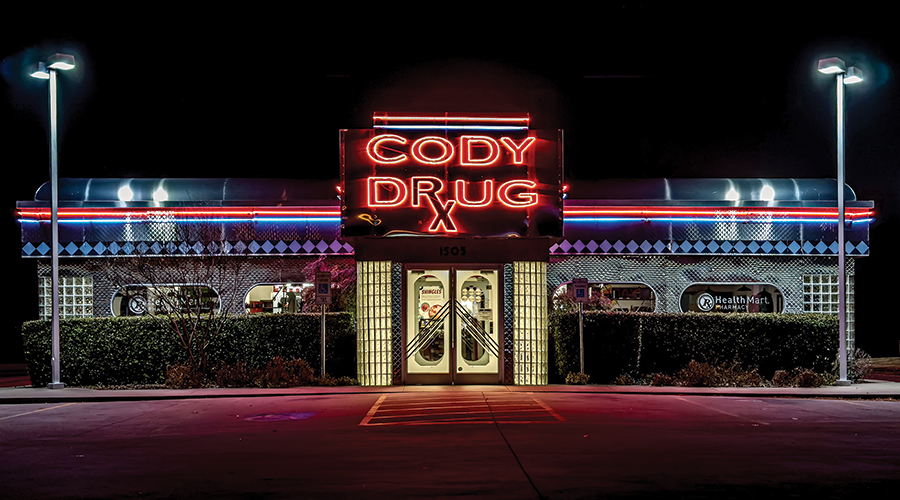
Founded in 2010, Cody Drug was built from the ground up by Stacy Cody. But seven years later, he sold the store to Will Douglas, Pharm. D., who had had the privilege of carrying it forward for close to a decade.
“In early 2017, our wholesaler at the time, McKesson, reached out to me. Cody was interested in selling the store, but up to that point he hadn’t found anyone he felt could run it well. McKesson connected us, and Stacy and I spent about four months negotiating and working through the details. It was a large pharmacy, so getting the deal done took time. We closed in early September 2017,” said Douglas.
The original mission was simple: treat every single person who walked through the door like family. That served the pharmacy well for a long time. But more than anything it was about being a pillar in the community and being involved.
“I grew up around independent pharmacy. My uncle was the most successful person I knew growing up. He was a pharmacist in Duncan, Oklahoma, and owned three pharmacies. Watching him and seeing how he provided for his family through pharmacy ownership, I knew I wanted that, too. It was the only career path I ever really wanted.”
At that point, Douglas was 30 years old and had acquired one pharmacy and had some success with it. Back then, the model was to buy several independent pharmacies and leverage a better cost of goods across them.
“When I bought Cody Drug, I was thinking I’d buy four or five more. My mentor in Dallas owned seven or eight at one point. That was the playbook. But as PBM reimbursements kept declining, that model became a liability. Suddenly you’re working with extremely thin margins across multiple locations, and each one functions differently,” said Douglas.
“I’ll admit where I went wrong as an owner. I kept trying to fit a square peg into a round hole. I kept thinking that if we could just take care of more customers, if we could just keep going the extra mile, if we could just tinker with our wholesale contracts or this buying group or that buying group, or our PSAO, we could get it dialed into where we were still profitable. That was never going to be the case because the PBM rates just kept declining.”
Douglas also had some experience working at a sterile pharmacy early on, but he was hesitant to get into it due to the liability involved.
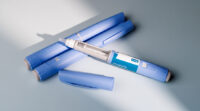
“What I’ve learned as a business owner is that the liability is exactly what keeps everyone else from doing it,” said Douglas. “We got lucky. We were approached by a sterile lab company in the spring of 2024, and it felt like a once-in-a-lifetime opportunity and, honestly, an opportunity to save the business. So, we went ahead with it. The demand for personalized medicine is sky high right now, and I don’t think that’s going away.”
When asked what standards a sterile compounding pharmacy meets, Douglas replied, “The short answer… a lot of them, and rightfully so. The foundation is USP <797>, the national standard for sterile compounding. It governs everything … how the cleanrooms are designed and pressurized, how air quality is maintained, how staff garb up and are tested on their technique, how surfaces and air are sampled for microbial growth, and how long a compounded preparation can be used. On top of that you have state board of pharmacy requirements, licensing in every state we ship into, and third-party testing of the products themselves … potency, sterility, and endotoxins.”
Since adding sterile compounding, Douglas said the impact he’s most proud of is how many more people they’ve been able to hire, and how much better they’re able to take care of their employees.
“If you can’t take care of your employees, your employees can’t take care of your patients. It starts there,” he said. “There’s one patient who sticks with me. When they first came to us, they had absolutely debilitating knee problems, the kind of pain that dictates your whole day. Through their weight loss journey on compounded medications, they’ve lost so much weight that their knee pain is simply gone. This is somebody who used to struggle to get around, and now they come jogging into the store, practically jumping up and down and happy to see us. That’s the kind of chance we get to witness. Not just a number on a scale, but somebody getting their life back.”
More articles from the September 2026 issue:
- Your New Front-End Minimalism
- Reinventing the Pharmacy Technician
- Creating a Comprehensive & Profitable Non-Flu Vaccine Program
- Quality Choice Private Label
- In-Pharmacy Testing
- Market Segmentation
- GLP-1 Reimbursement
- Cody Drug
A Member-Owned Company Serving Independent Pharmacies
PBA Health is dedicated to helping independent pharmacies reach their full potential on the buy-side of their business. Founded and run by pharmacists, PBA Health serves independent pharmacies with group purchasing services, wholesaler contract negotiations, proprietary purchasing tools, and more.
An HDA member, PBA Health operates its own NABP-accredited warehouse with more than 6,000 SKUs, including brands, generics, narcotics CII-CV, cold-storage products, and over-the-counter (OTC) products — offering the lowest prices in the secondary market.